(We)ave Made History
(We)ave Made History
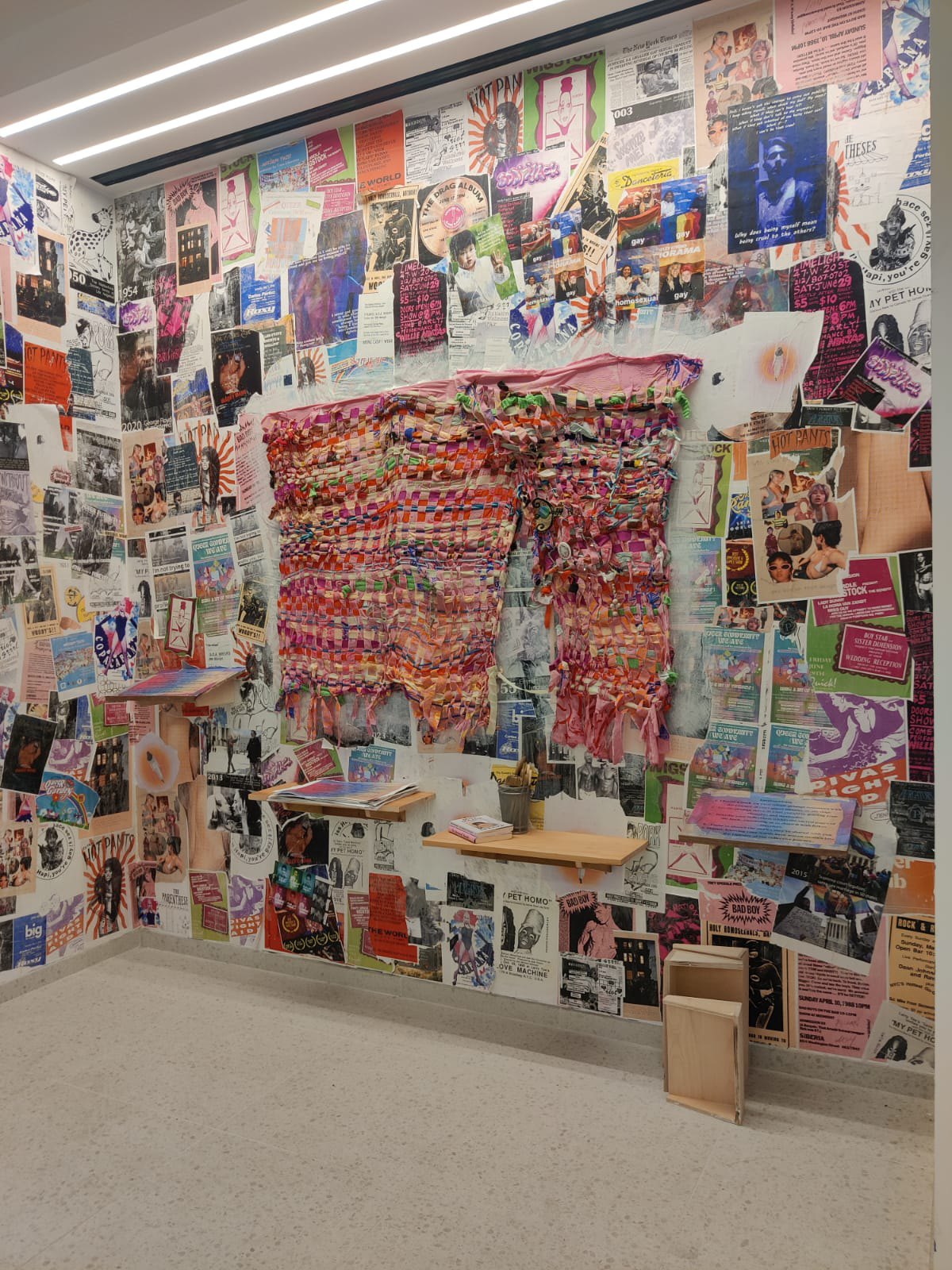
a wall that asks visitors to add themselves to queer history: a community weave, handmade journals, a collage of posters from queer spaces, and a place to rest. five of us from Parsons made it with Pride Live.
on display since June 2024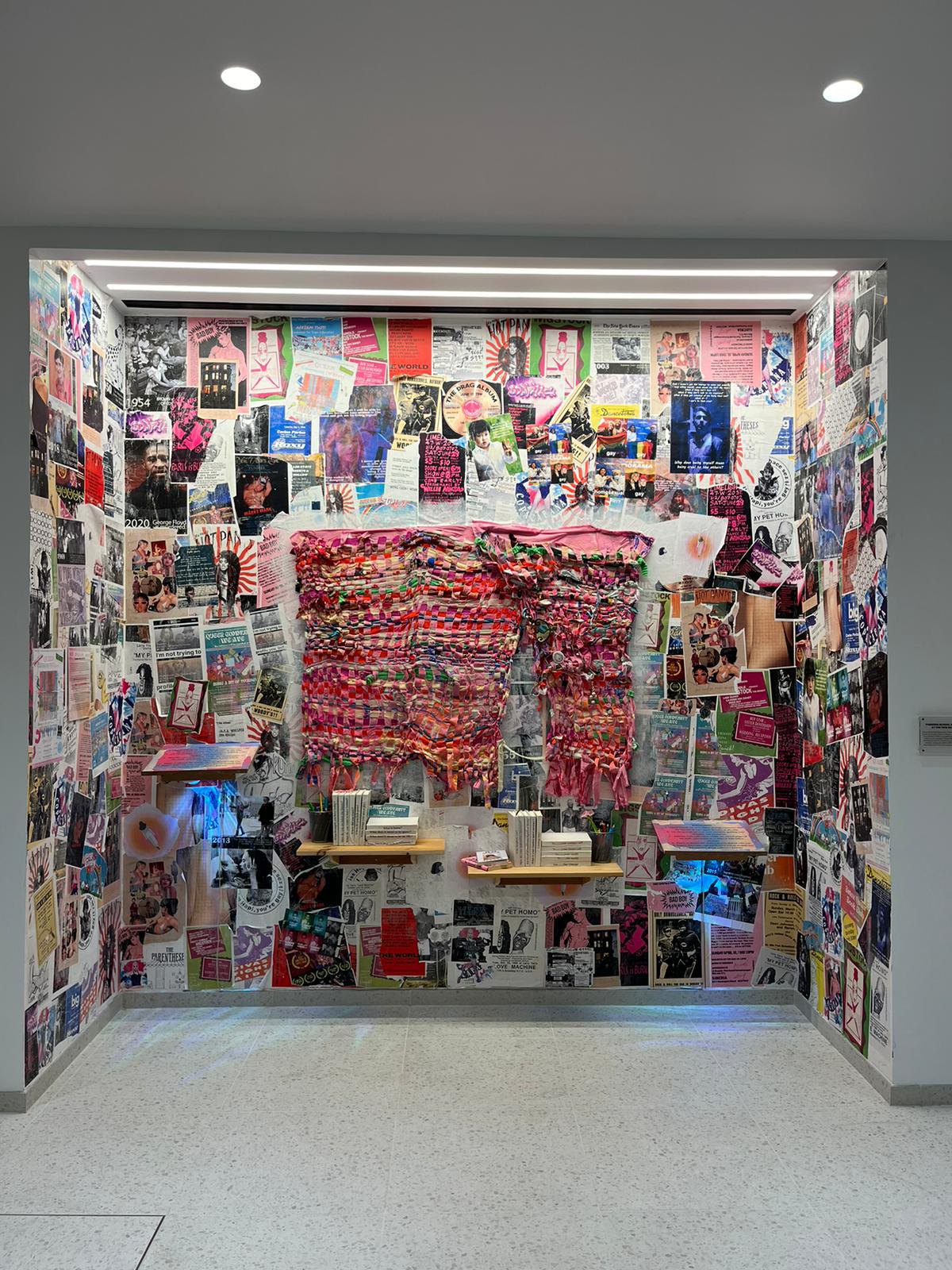
the visitor center tells the story of the 1969 Stonewall uprising. Pride Live wanted younger voices in it, and we kept asking whose histories the usual story leaves out.
i co-curated and designed the collage wall, co-led the lighting, designed the journal covers and flyers, and helped run three public weaving sessions.
it became the most popular part of a visitor center that sees 1.58M people a year. later student exhibits rotated out; ours is still on display.
The exhibit is, by far, the most popular area of the Visitor Center. Guests LOVE writing in the books and also reading the notes from others.the visitor center staff
one story leaves people out
we started from four ideas: whose history gets told, queer rest as resistance, passing knowledge to younger people, and weaving as a way to hold many stories at once.
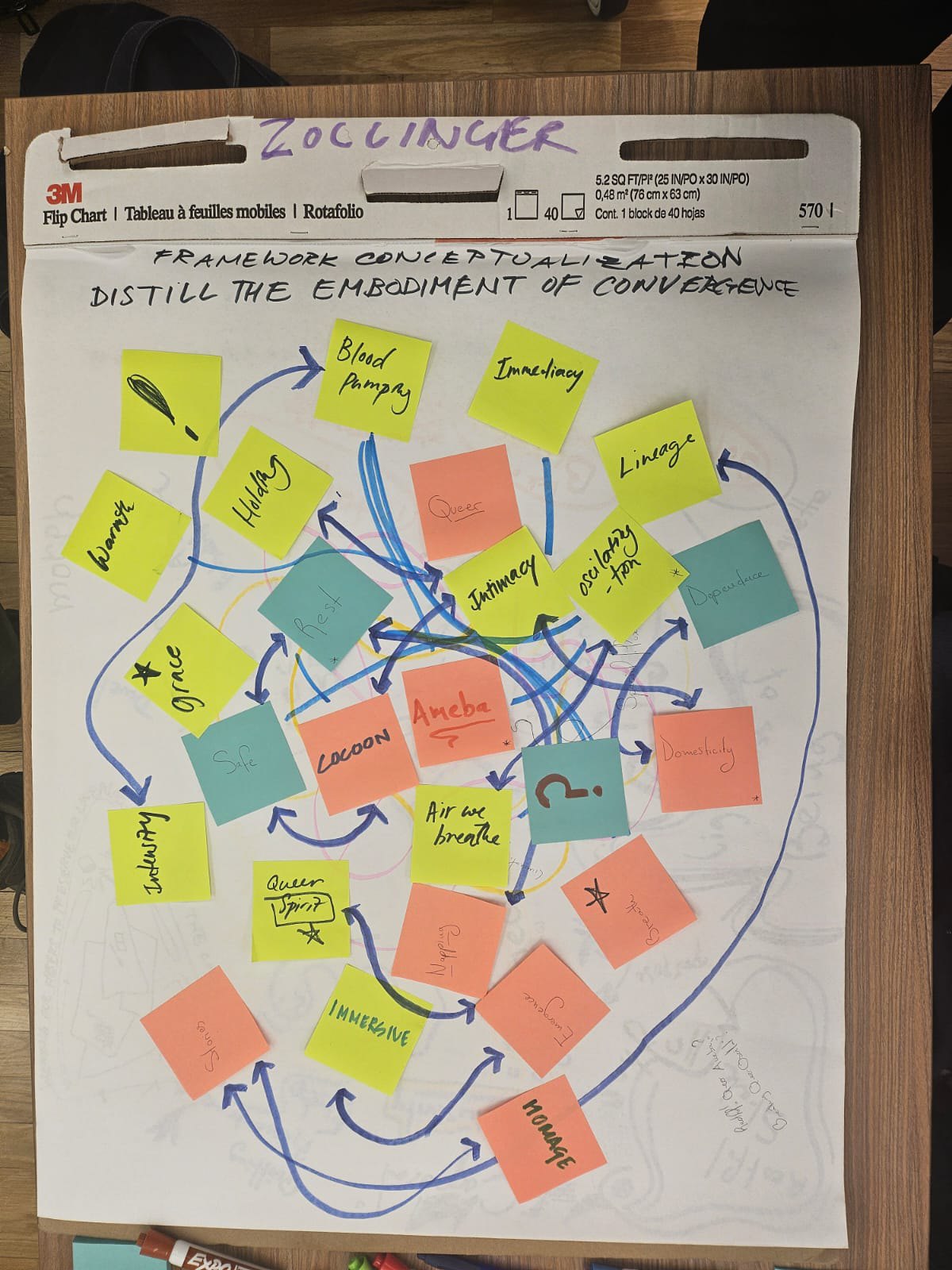
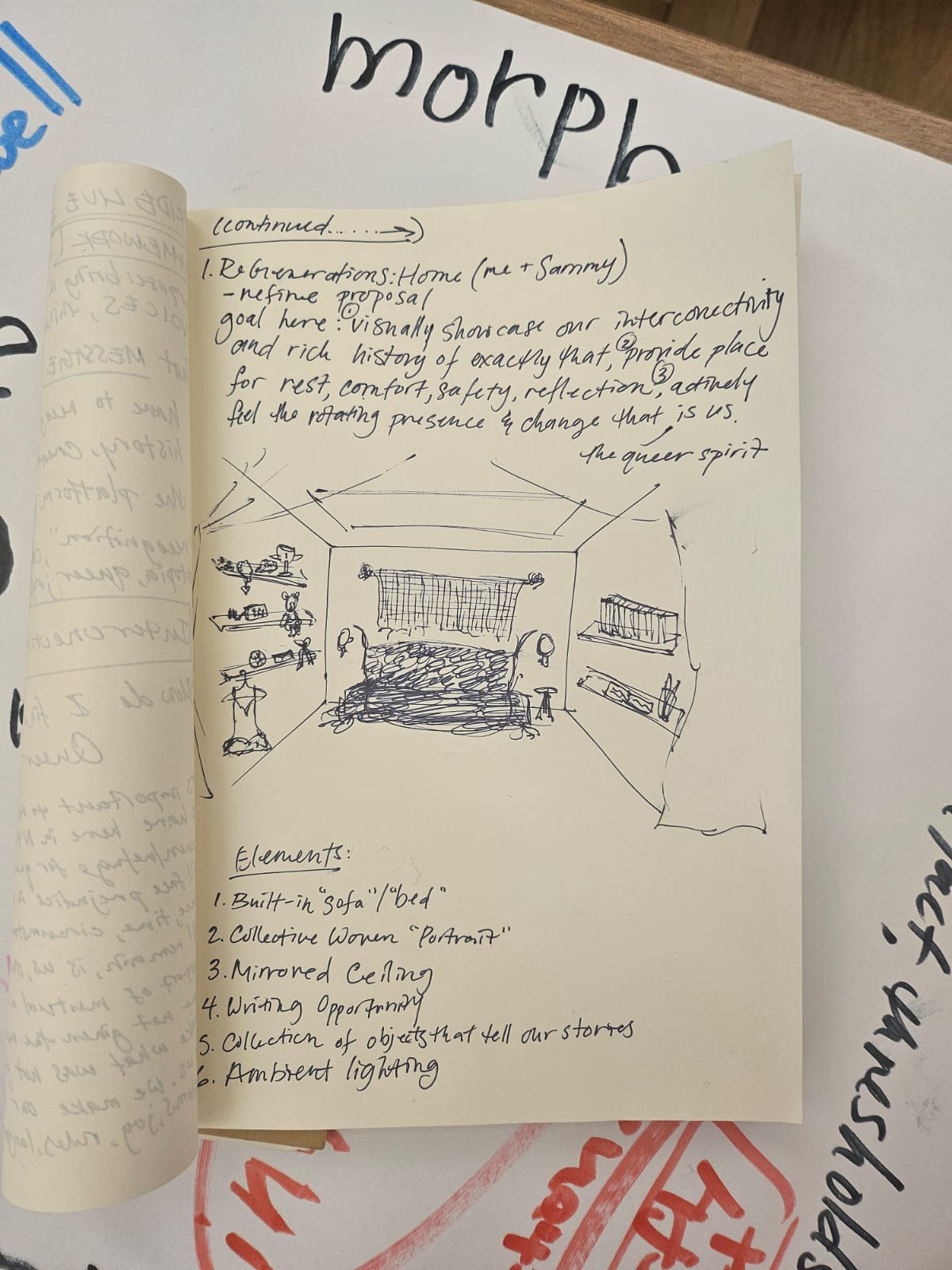
our presentation to Pride Live
the research, the concept, the materials, and the install plan, before anything was built.
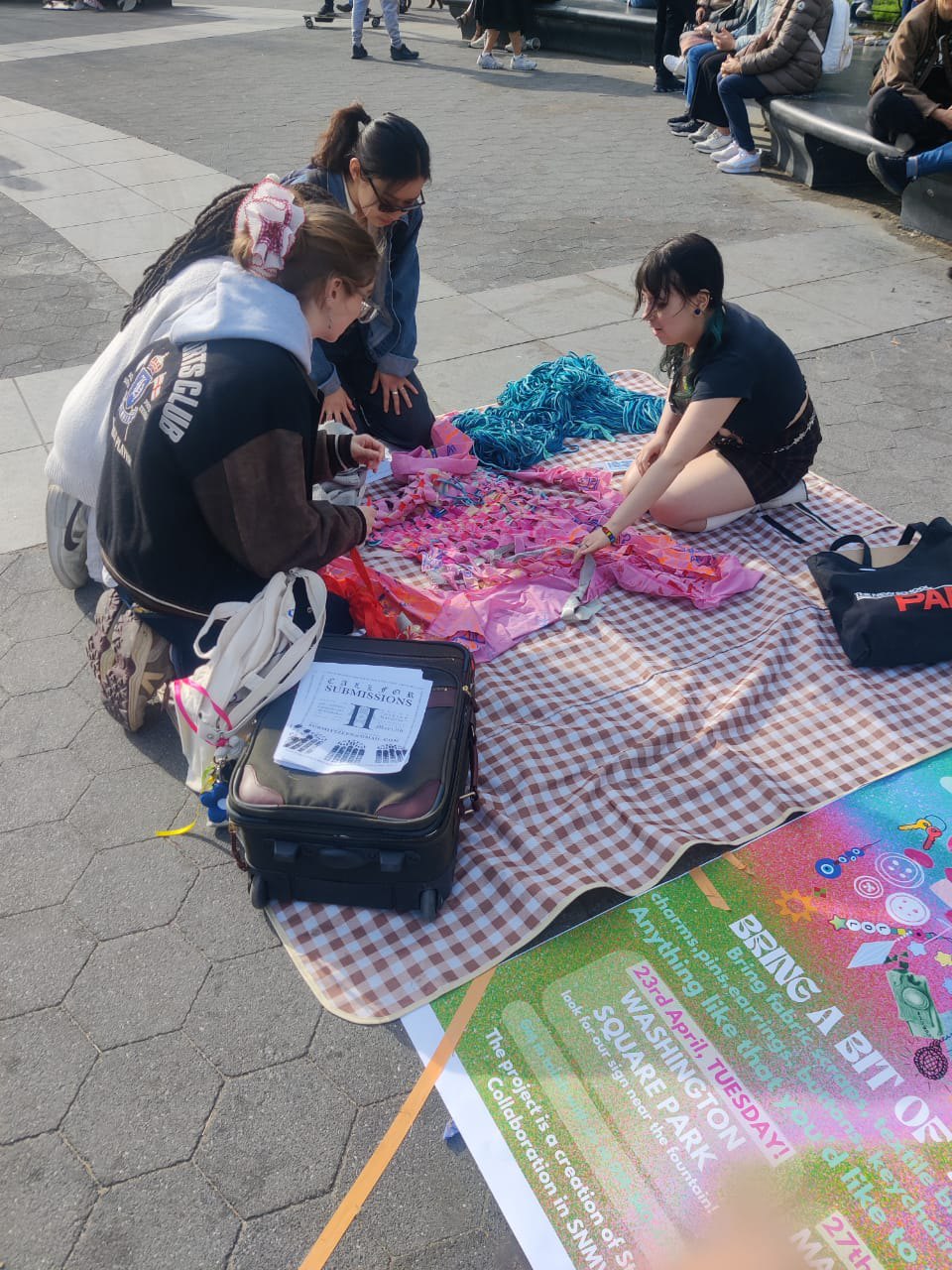
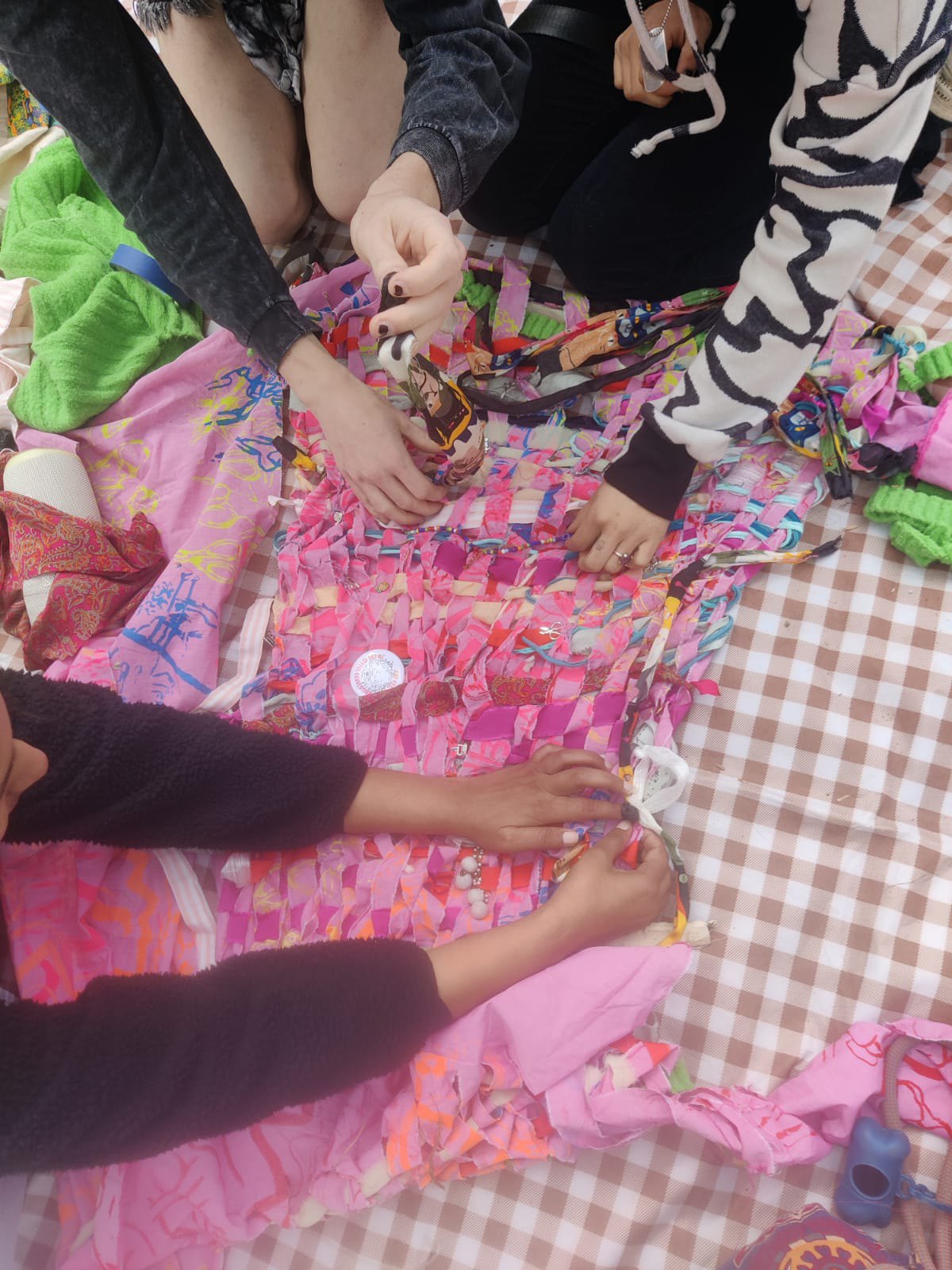
three public sessions
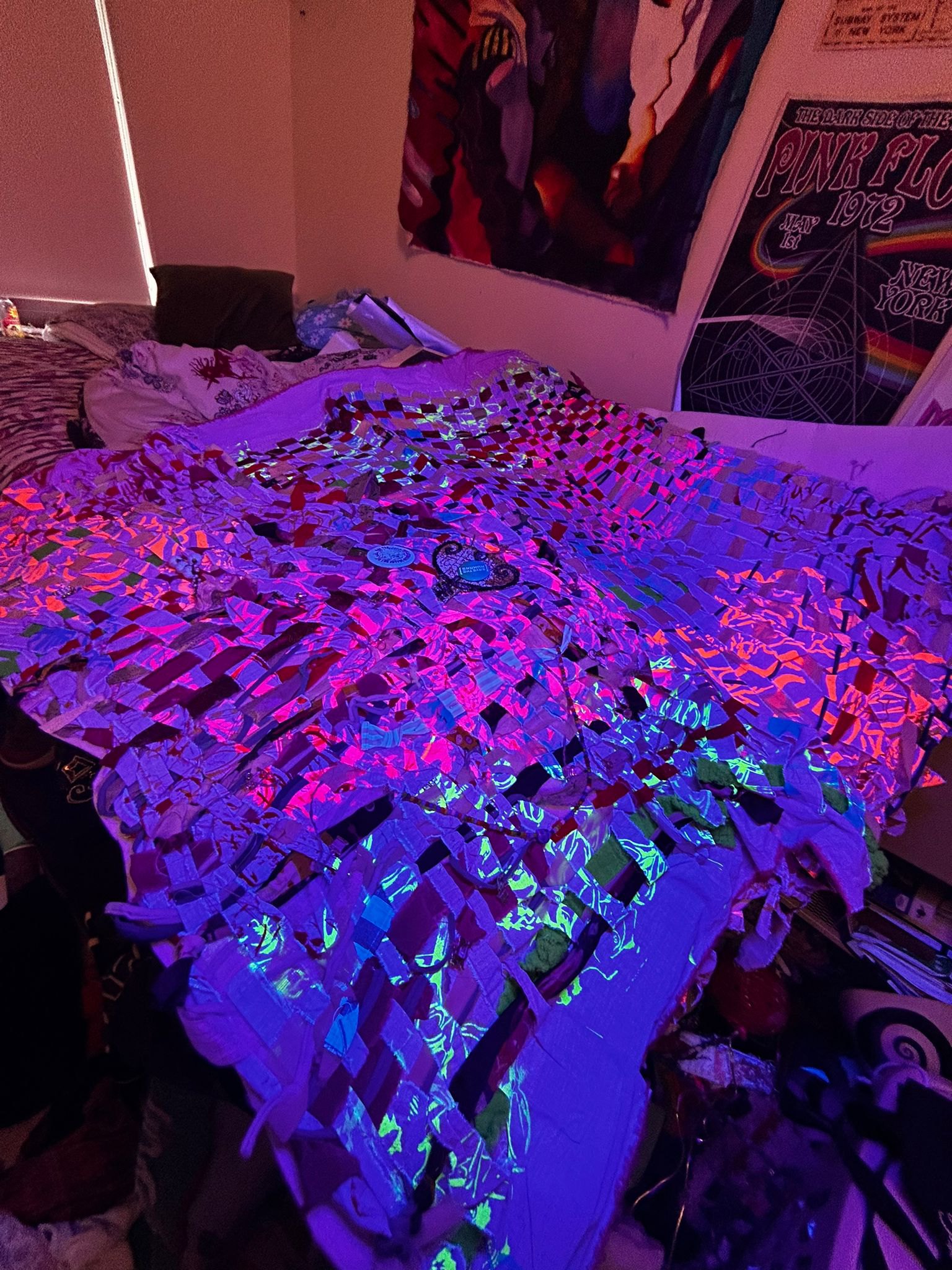
more than 50 people wove strips into the piece and shared stories and objects.
the weave is built on textiles from the class before us, so their year is in it too.
the collage wall and the light
i co-curated the posters and laid out the wall, and made some of the posters in InDesign. colored light brings back the feel of the bars and clubs the posters came from.
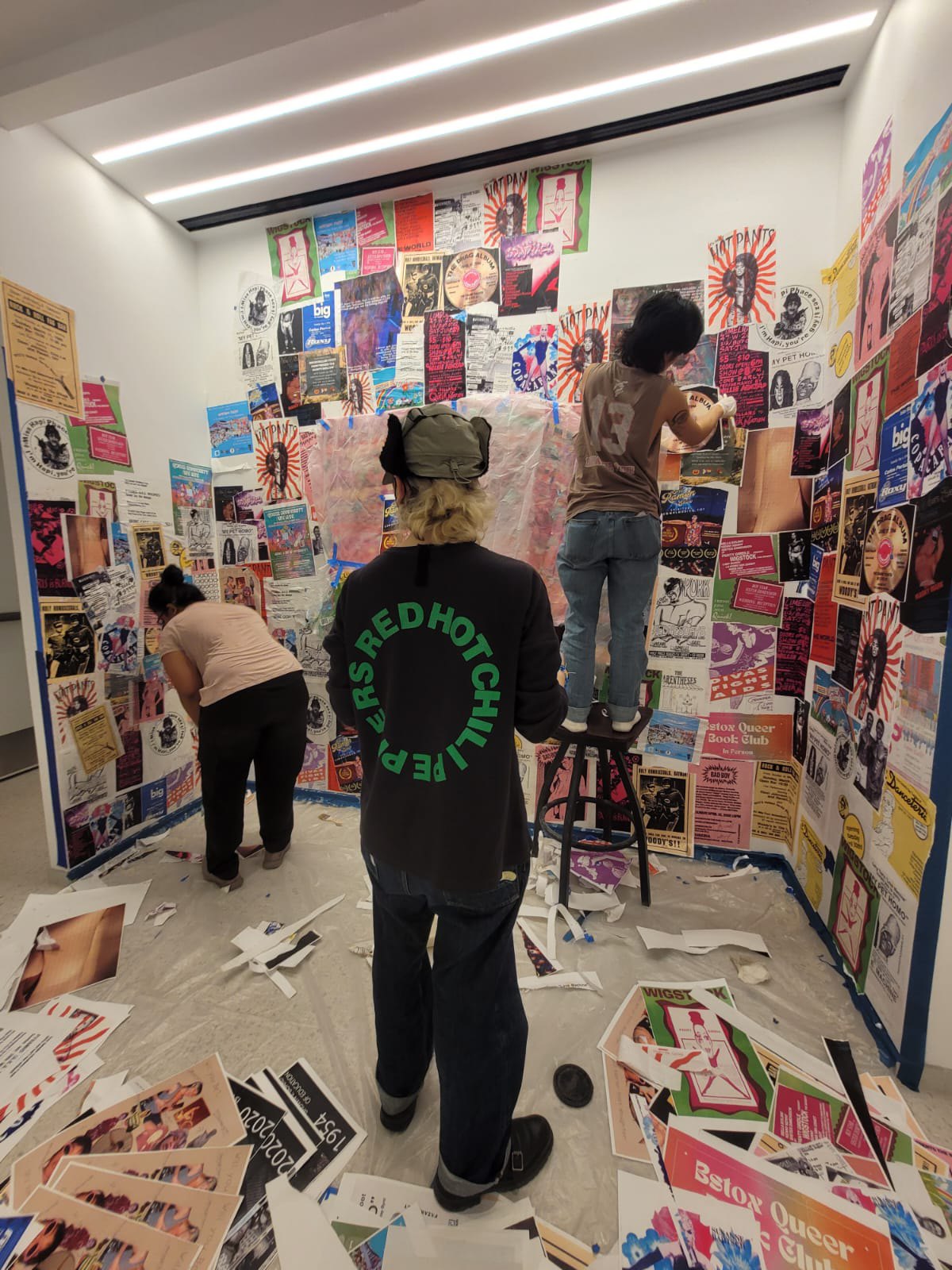
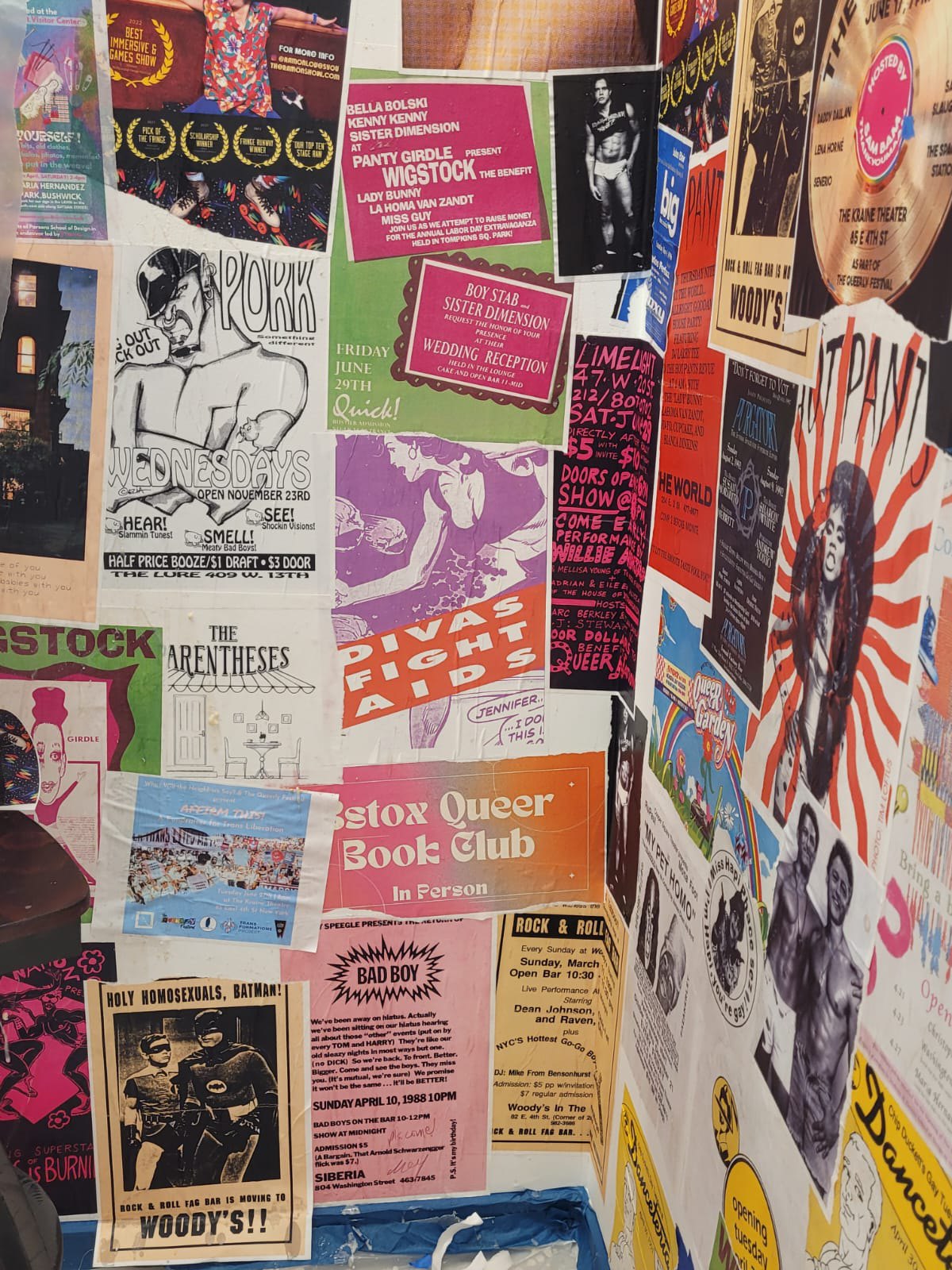
people stay
staff told us visitors spend the most time here, sometimes sitting on the floor to read. people cry, leave notes for family members who have passed, and children write in the books.
the best part was seeing visitors recognize themselves in it.
we set out to ask whose histories the Stonewall story leaves out. the journals and the collage wall let visitors answer that themselves, so the installation collects stories from queer people today and their allies, next to the history of 1969. it keeps changing as people add to it.
it also changed how i think about designing with a community. the weave is built on textiles from the class before us, and the sessions brought in stories and objects we couldn't have planned. i'd rather put people's voices at the center than arrive with a finished idea.