Misinfo Madness
Misinfo Madness
a card game for spotting fake news with friends. two teams sort real headlines into true and false, and the other team can challenge any call.
the final game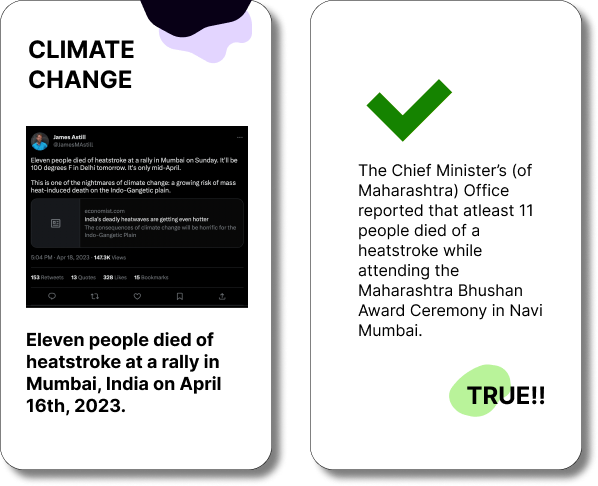
people believe what friends share and rarely read past the headline. most media-literacy tools are either too academic or too simple to stick.
i led the mechanics and rules, designed the challenge system and the seven card categories, and worked on research and the cards.
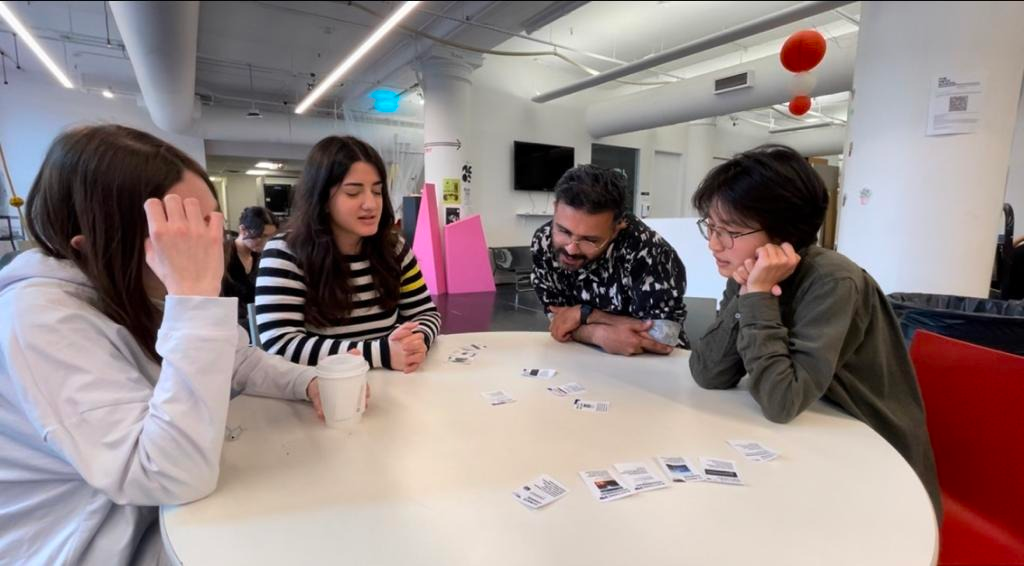
two rounds of playtesting. players were surprised how often a real-sounding headline fooled them, and said the arguments were the best part.
first team to 10 points
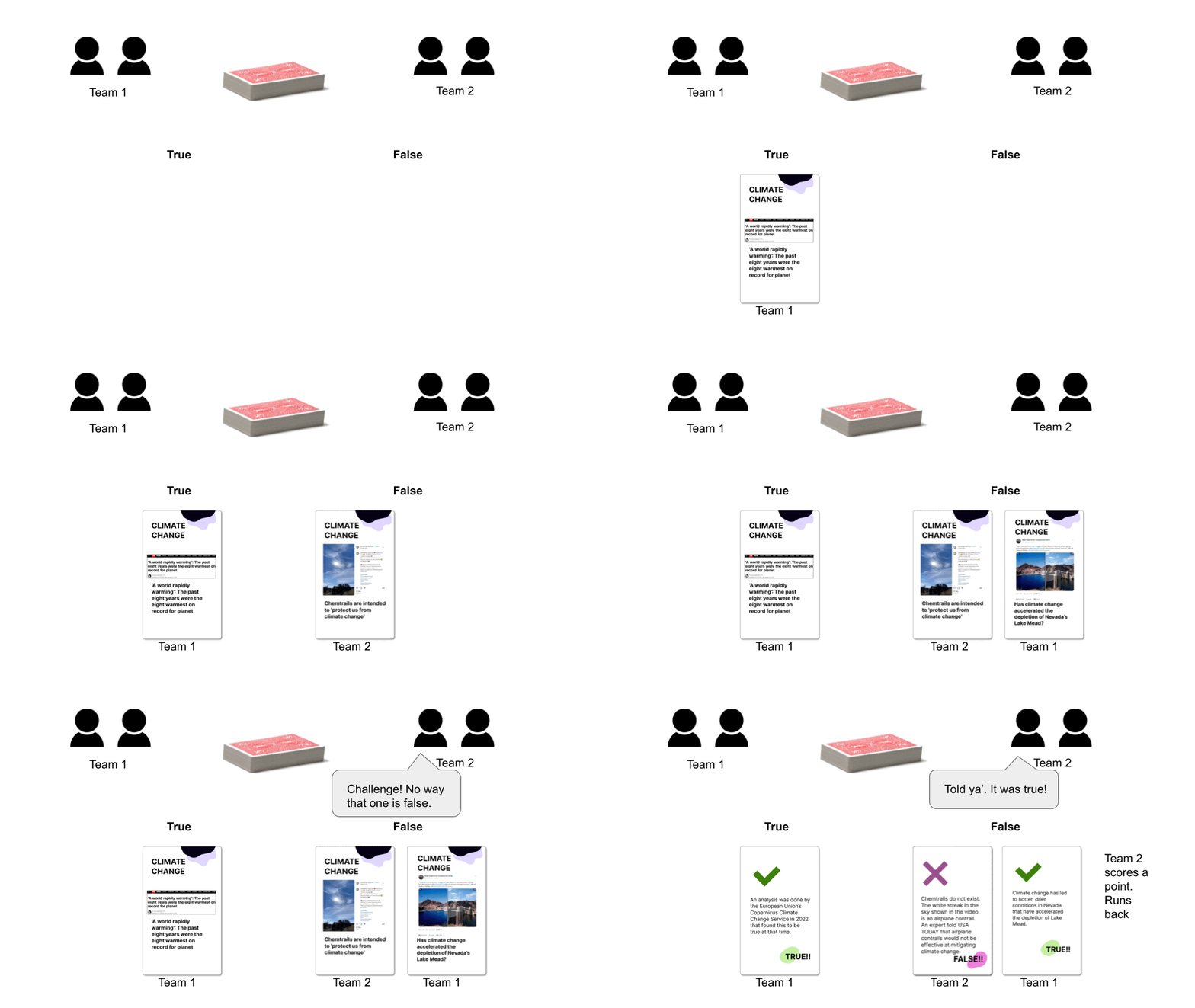
a team picks a category, draws a card, talks it over, and calls it true or false.
- 01the other team can challenge any call, and the card gets flipped
- 02the back says why it's true or false, with the source
- 03a correct call or a winning challenge scores a point
three rounds of cards
the arguments mattered most in early tests, so the challenge system grew and the explanations on the back got longer.
I was shocked by how many times I got fooled by a headline that sounded completely legitimate.a playtester
The discussions we had while deciding if something was true or false were the best part.another playtester
you can teach media literacy without being prescriptive, by having people teach each other.
the card only gives the answer after the table has argued about it. players defend their call, get challenged, and explain their reasoning to each other.
next would be a web version with a bigger card library that keeps up with the news.
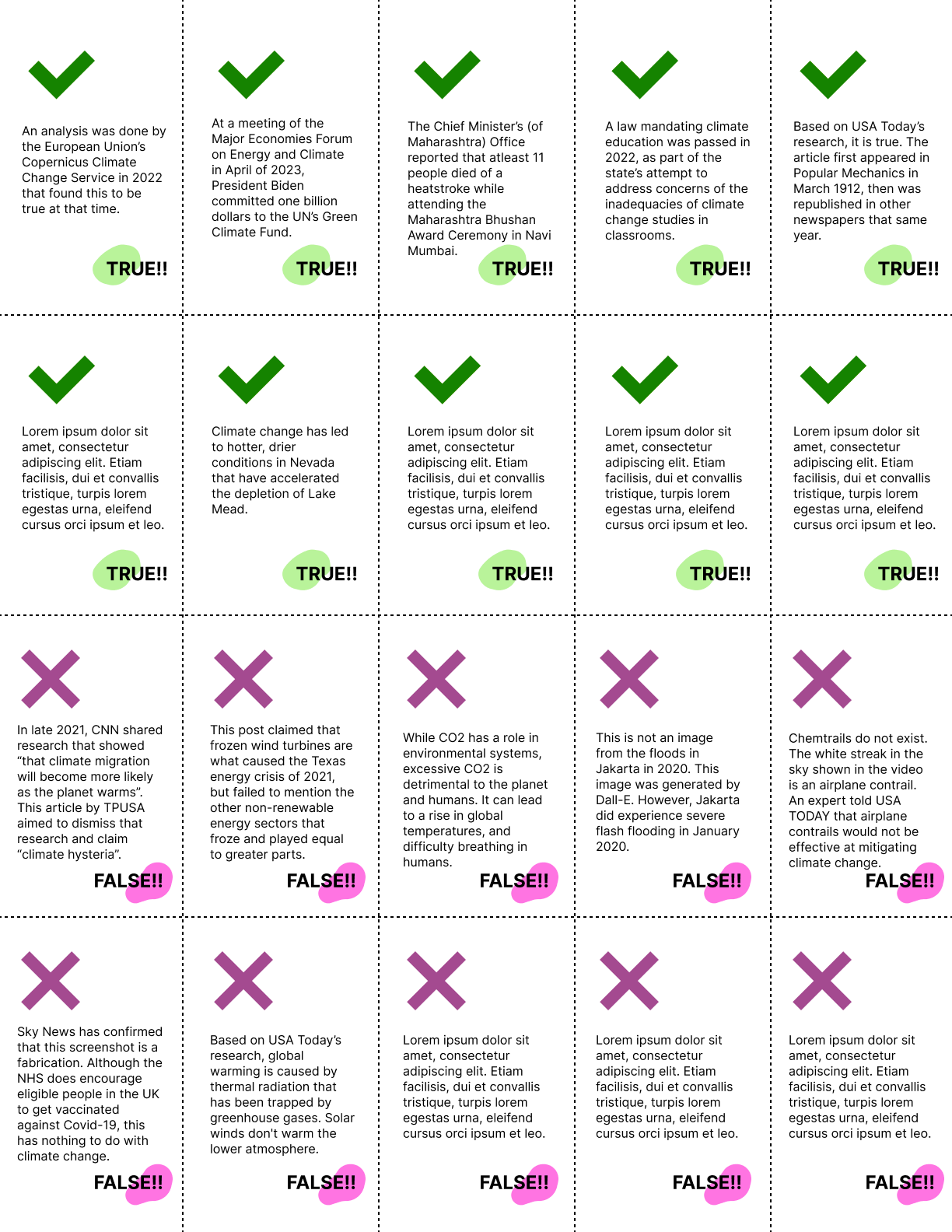
the climate change set
every back says true or false, why, and where that comes from.